

1 min read
Reimagining Procurement: A Guided Framework for Smarter School Operations
For many charter and private schools, procurement often happens behind the scenes—handled quickly, quietly, and usually under pressure. But what if...
3 min read
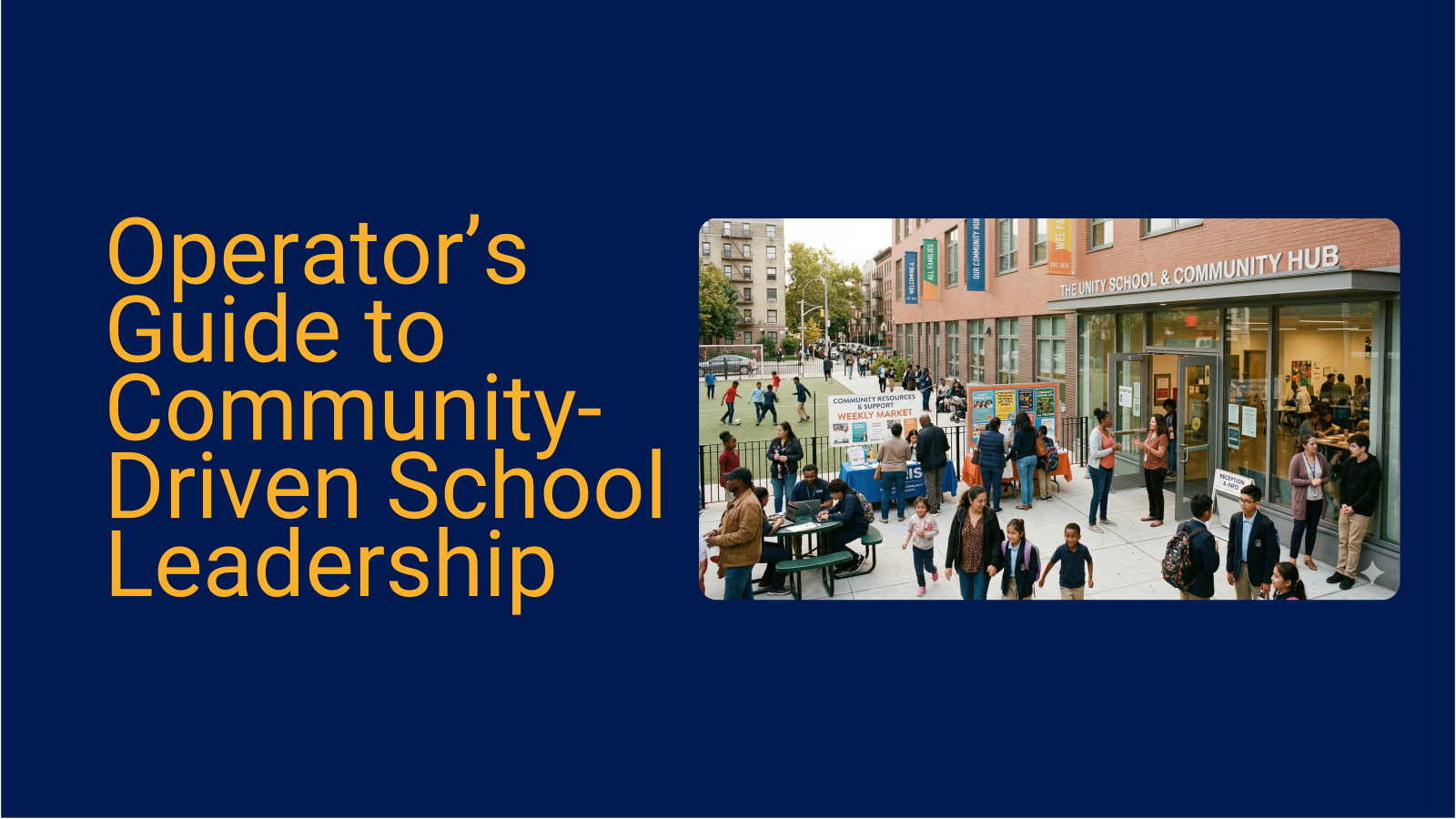
What does it really mean to lead a school that is deeply connected to its community?
For many school leaders, “community engagement” is seen as a soft skill—important, but difficult to operationalize. At the same time, leaders are under increasing pressure to deliver measurable outcomes, improve student support systems, and scale effectively.
But what if community connection wasn’t separate from operations…
What if it was the foundation of it?
In recent conversations on The Charter School Insider Podcast, two Chicago-based charter school leaders—Ebonie Durham (Great Lakes Academy) and Jemia Cunningham-Elder (North Lawndale College Prep)—shared a powerful, complementary perspective:
This blog breaks down a practical framework for charter school leaders who want to move from community awareness → to execution → to measurable impact.
One of the most common mistakes schools make is trying to solve problems before fully understanding them.
As Jemia Cunningham-Elder explains, many organizations enter communities with pre-defined solutions—without asking whether those problems even exist in the way they assume.
This creates immediate misalignment.
One key insight from Jemia’s experience:
Families often expect schools to be community hubs, not just academic institutions.
That means:
👉 If leaders don’t ask, they miss this entirely.
Once you understand community needs, the next challenge is prioritization.
Ebonie Durham offers a simple but powerful operational lens:
Should we build this internally, or partner externally?
Her framework:
This prevents a common operational failure:
👉 Trying to do everything in-house—and burning out your team
Once needs are defined, the next step is execution—and this is where many schools struggle.
Not all partnerships are created equal.
According to Ebonie, the difference is clear:
High-impact partnerships at Great Lakes Academy include:
These are not one-off programs—they are integrated systems of support.
Here’s the reality:
👉 Partnerships don’t fail because of bad intentions
👉 They fail because of weak operations
From both leaders, a clear theme emerges:
1. Clear Ownership
2. Systems & Coordination
3. Data & Measurement
4. Ongoing Evaluation
As Jemia notes, even strong partnerships need to be revisited regularly—because both the community and the organization evolve over time.
Academic outcomes matter—but they don’t tell the full story.
Ebonie emphasizes the importance of tracking:
These indicators often show whether partnerships are improving the conditions for learning, which ultimately drive academic success.
Listening is critical—but it’s not enough.
Trust is built when schools:
One example:
This creates a virtuous cycle:
👉 Trust → Engagement → Stronger Partnerships → Better Outcomes
A final mindset shift connects everything:
Many leaders operate from a place of constraint:
But as Ebonie puts it:
What if we tried?
Community-driven leadership requires:
Because if leaders can’t envision what’s possible, they won’t build it.
Schools today are being asked to do more than ever:
The leaders who succeed will not be those who try to do everything alone.
They will be the ones who:
In other words:
👉 The future of school leadership is community-driven and operationally excellent
Want to go deeper?
🎧 Ebonie Durham: Building Partnerships That Drive Student Support
(Insert link)
🎧 Jemia Cunningham-Elder: Rooted in Community
(Insert link)
Community is not a “nice to have.”
It is the starting point.
Operations are not just internal systems.
They are how vision becomes reality.
And when the two come together—
schools don’t just educate students…
They transform communities.
If you're thinking differently about community and partnerships after reading this…
The next step is execution.
We put together a simple checklist to help you operationalize what you’ve learned.
👉 Download the Operator’s Checklist

To learn more about how our experts can support your operations.
.svg)
1 min read
For many charter and private schools, procurement often happens behind the scenes—handled quickly, quietly, and usually under pressure. But what if...
1 min read
Strong enrollment strategies rely on more than admissions.They depend on operations that can consistently deliver the experience families are...

1 min read
Purchasing is often seen as a back-office task—comparing prices, placing orders, and managing budgets. But what if every purchase your school made...