

1 min read
Vendor Contract Renewals: What Must Happen Before July 1
Auto-renewals don't announce themselves. They arrive as invoices that look just like last year's, just higher.
5 min read
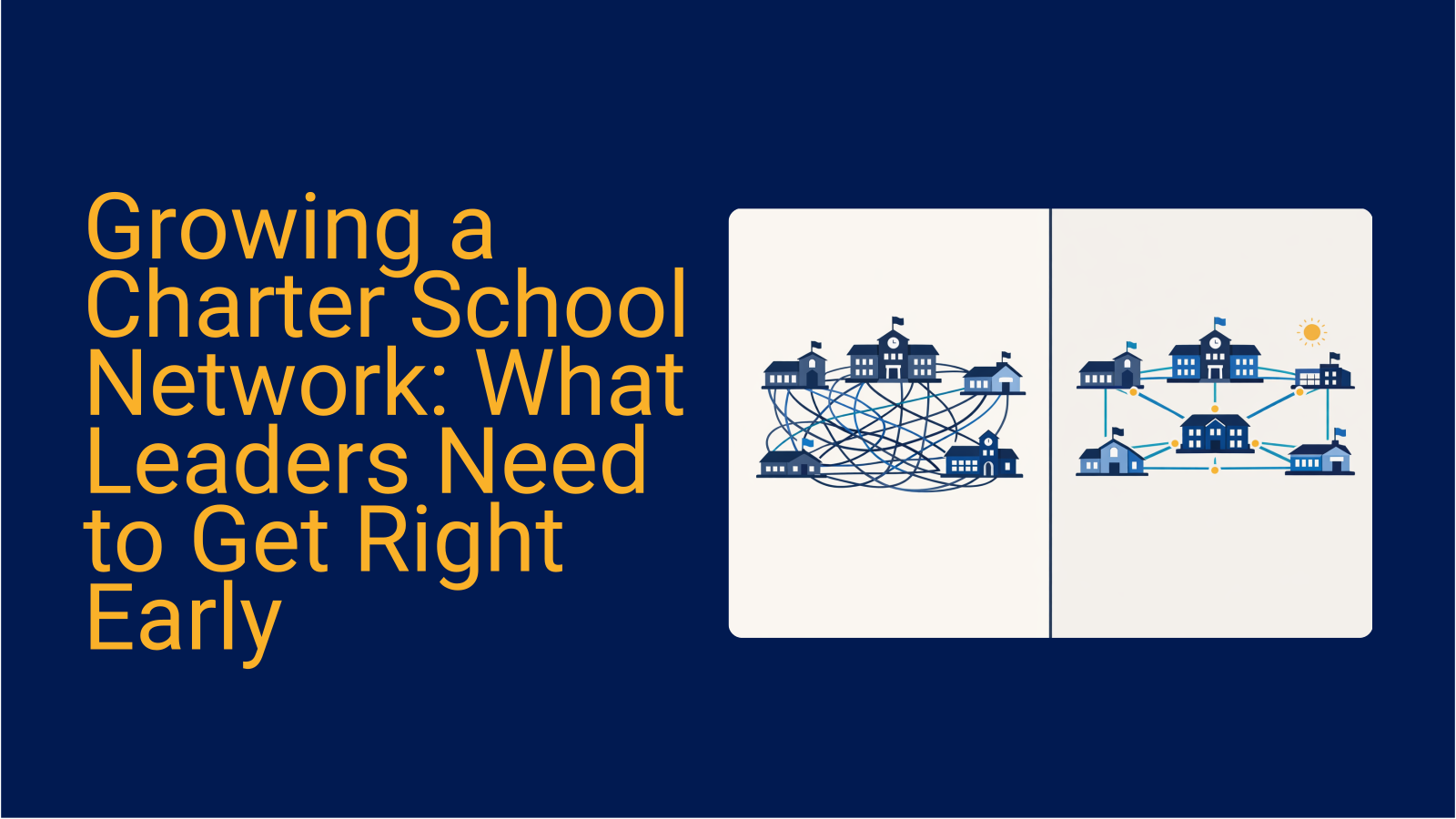
Charter school leaders rarely need to be told that growth takes more than ambition. They already know that strong systems, thoughtful planning, and capable teams matter.
What growth often does, though, is put new pressure on those fundamentals. It asks organizations to clarify what can no longer stay informal, strengthen what already works, and build the conditions for quality to hold as the network becomes more complex.
At BuyQ, that is a theme we hear often in conversations with school leaders. It also came through clearly in recent episodes of The Charter School Insider Podcast. Across organizations at very different stages of growth, the same early priorities kept surfacing. This article highlights a few of them and offers practical ways to reinforce them early.
One of the clearest patterns across growing charter school networks is that growth starts long before a new campus opens.
The strongest growth decisions are usually grounded in mission, community need, and a realistic understanding of what it will take to sustain quality over time. Growth is not just about opening another campus. It is about making sure the organization is ready to support that campus well.
Action items
Most charter school leaders already understand the importance of starting strong. As a network grows, day-one readiness becomes even more useful because it reflects how well planning, coordination, communication, and execution are working across teams.
Facilities, technology, staffing, safety, communication, and scheduling all come together in those early moments. When those pieces are aligned, schools are better positioned to launch smoothly and support staff from the start.
Action items
In the early stages, strong people and close communication can carry a lot. As networks grow, clear systems help preserve what is already working. They make expectations easier to communicate, routines easier to repeat, and quality easier to sustain across campuses.
At BuyQ, we see this as an opportunity to reinforce clarity. Strong systems are not about adding process for its own sake. They are about helping teams execute with more confidence and consistency as the organization takes on more complexity.
Action items
Charter school leaders know that operations and instruction are deeply connected. As networks grow, reinforcing that connection becomes even more important.
Operations shapes the conditions in which teaching and learning happen. Arrival and dismissal, family communication, staff readiness, technology access, facilities, meals, and safety routines all influence how much time and focus educators can devote to students. When those systems run well, they reduce friction and help protect instructional time.
Action items
Budget matters, but so does execution capacity. As organizations grow, both need to be considered together.
Capacity includes time, project ownership, leadership attention, communication, and the ability of teams to absorb change while still performing well. That often becomes one of the clearest indicators of whether new initiatives or growth plans will feel sustainable in practice.
Action items
As charter school networks grow, leadership capacity becomes one of the clearest ways to support consistency across campuses.
Strong schools and networks are built by people who can lead, coach, solve problems, and improve systems over time. That includes school leaders, operations leaders, regional leaders, and team members who help translate strategy into day-to-day execution.
At BuyQ, we see leadership development as one of the best ways to reinforce growth over time. Systems matter, but they are only as strong as the people who own and improve them.
Action items
At some point, every growing charter school network has to answer a version of the same question: how do we keep quality strong as complexity increases?
This is where sustainable growth becomes the real goal. Not just opening more schools, but making sure the organization can support them with the same level of clarity, consistency, and care. That often means reinforcing the fundamentals leaders already value: aligned systems, strong people, clear expectations, thoughtful planning, and a commitment to continuous improvement.
Action items
A charter school network is more prepared for growth when mission alignment, community demand, operational readiness, and leadership capacity are moving in the same direction. Sustainable growth usually happens when leaders are strengthening the organization’s ability to support quality over time, not just preparing to open another school.
Before opening a new campus, leaders should focus on readiness across staffing, facilities, technology, communication, and operational execution. Clear ownership, realistic timelines, and strong coordination across teams often make the difference between a smooth launch and a stressful one.
Most organizations benefit from strengthening systems earlier than they think they need to. As complexity increases, documented and repeatable processes help preserve quality, reduce friction, and support more consistent execution across schools.
Day-one readiness matters because it reflects how well an organization plans, communicates, and follows through. It is often one of the clearest real-world indicators of whether cross-functional systems are aligned well enough to support growth.
Leaders can support healthy growth by reinforcing the fundamentals early: mission clarity, strong systems, operational readiness, leadership development, and thoughtful planning. The goal is not just to expand, but to make sure quality holds as the organization becomes more complex.
Charter school leaders rarely need to be told that the fundamentals matter.
What growing organizations often need most is the time and space to reinforce those fundamentals before complexity makes them harder to strengthen. The leaders building healthy, sustainable charter school networks are often the ones who keep returning to those core priorities: mission clarity, operational readiness, strong systems, leadership development, and the discipline to maintain quality over time.
That is the kind of growth BuyQ believes in.
Want to explore the conversations that informed these reflections? Listen to these episodes of The Charter School Insider Podcast:
If your team is thinking more intentionally about growth after reading this, the next step is turning reflection into a practical planning conversation.
We created the Campus Expansion Scenario Planner to help charter school leaders assess readiness, surface risk areas, and identify what to reinforce before opening another campus.
👉 Download the Campus Expansion Scenario Planner

To learn more about how our experts can support your operations.
1 min read
Auto-renewals don't announce themselves. They arrive as invoices that look just like last year's, just higher.

1 min read
If a few critical things don’t happen before summer and during summer, the fall will be harder than it needs to be.

1 min read
Recently at the annual Colorado League of Charter Schools Conference, BuyQ had the opportunity to present to a group of school business leaders from...